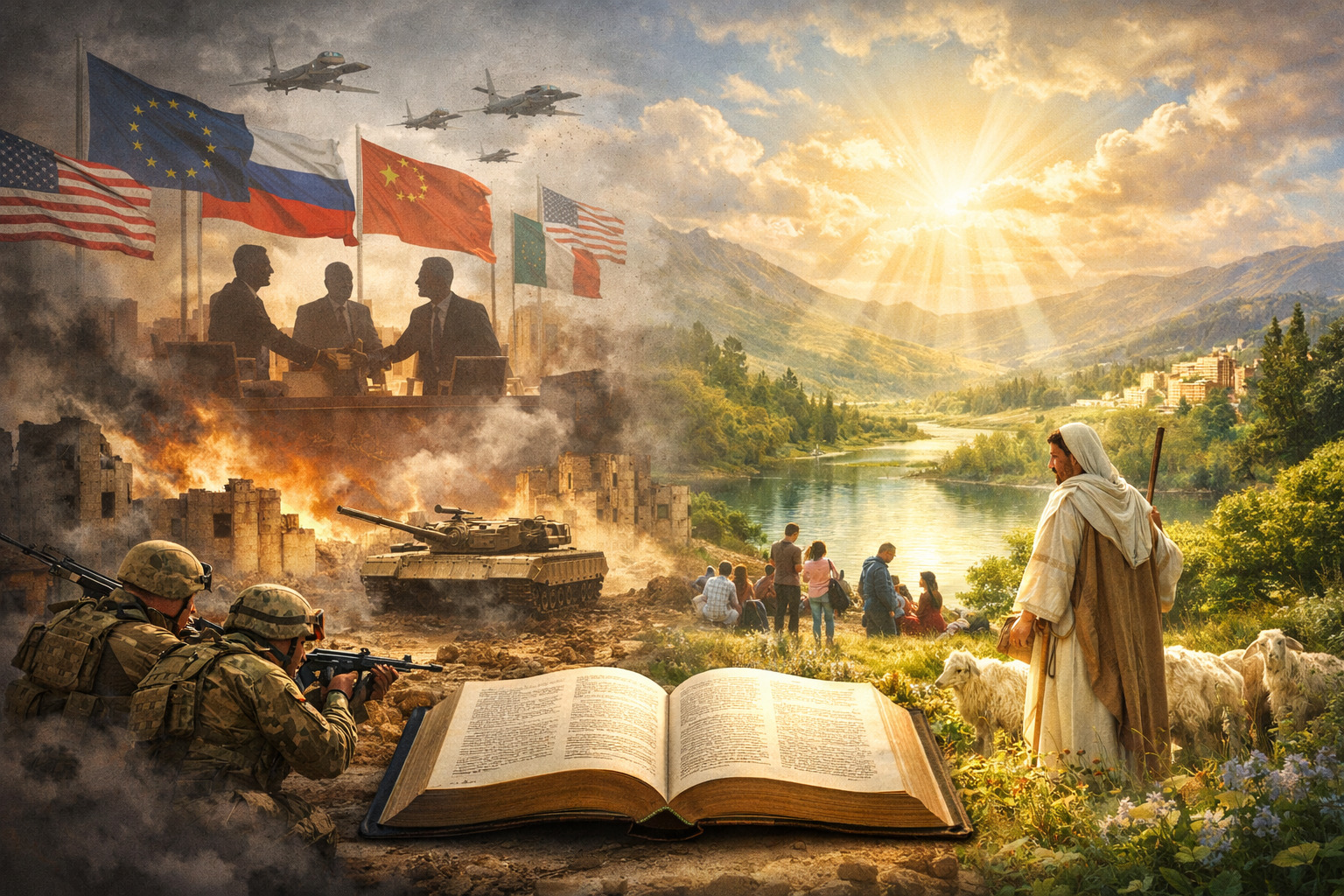
Throughout history, societies have looked to political systems for stability and peace. From ancient empires to modern democracies, governments have promised protection, justice, and prosperity. Yet despite advancements in law, diplomacy, and technology, the world continues to experience conflict, inequality, and uncertainty.
A Record of Human Effort
History books are filled with examples of ambitious rulers and reformers who sought to establish lasting peace. Alliances were forged, treaties signed, and international organizations formed with the hope of preventing war and securing cooperation.
While many of these efforts brought temporary stability, none eliminated the underlying causes of division — human imperfection, greed, nationalism, and injustice. Even the most carefully designed systems have struggled to produce enduring harmony.
The Bible’s Assessment
— Jeremiah 10:23
The Bible presents a sobering perspective: humans were not created to rule independently from God. While capable of organizing societies and establishing laws, humans lack the wisdom and moral perfection necessary to guarantee lasting peace.
Scripture acknowledges the role of governments in maintaining order. Romans 13:1–4 states that God permits human governments to exist. Yet the Bible also indicates that human rulership is temporary and limited in its ability to solve the deepest problems affecting humanity.
Why Political Solutions Fall Short
Political systems depend on imperfect individuals. Leaders change. Policies shift. Economic pressures and global tensions complicate even the best intentions. As long as selfishness and corruption exist, true and lasting peace remains elusive.
Furthermore, governments can address external behavior, but they cannot transform the human heart. Laws may restrain wrongdoing, but they cannot remove hatred, prejudice, or fear from within.
A Different Kind of Government
The Bible at Daniel 2:44 speaks of a Kingdom established by God — a heavenly government that will replace human rulership and remain forever. Unlike political systems subject to election cycles and human weakness, this Kingdom is described as righteous, just, and everlasting.
Under that rule, Scripture promises the removal of suffering, injustice, and war. Rather than relying on shifting political alliances, it offers hope rooted in divine authority.
Where Should Our Confidence Rest?
Recognizing the limitations of human governments does not require hostility or rebellion. Instead, it encourages realistic expectations. Christians are urged to respect authorities while placing their ultimate trust in God’s purpose.
History demonstrates humanity’s sincere efforts. The Bible explains why those efforts cannot fully succeed. Together, they point toward a greater solution — one that promises not temporary peace, but permanent security.